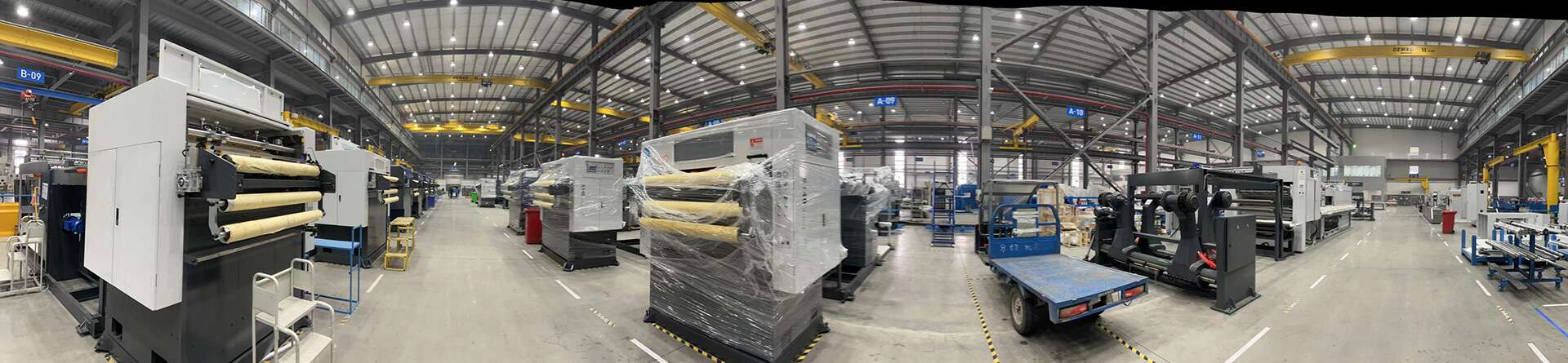
The steps for debugging the fully automatic high-speed die-cutting machine
Date:2026-01-15 13:18:02 Views:576
Mechanical commissioning
Install the cutting tools and templates: According to the requirements of the die-cutting products, select the appropriate die-cutting tools and templates, and correctly install them onto the knife holder and plate of the die-cutting machine. During the installation process, ensure the installation accuracy of the tools and templates. The cutting edges of the tools should be sharp and undamaged, and the flatness and fixation firmness of the templates should meet the requirements.
Adjust the pressure system: Start the equipment and set the die-cutting machine to a low-speed operation mode. Gradually adjust the die-cutting pressure. By observing the die-cutting results, such as the depth of the cut, whether there are cases of incomplete cutting or excessive cutting, make fine adjustments to the pressure to achieve the optimal state of the die-cutting pressure. Generally, start by reducing the pressure and then gradually increase it until the material can be cleanly cut without damaging the template and the cutter.
Adjust the feeding system: Install the material to be die-cut onto the feeding shaft and pass it through the feeding rollers and the tension control system. Adjust the pressure and spacing of the feeding rollers to ensure that the material is smoothly and accurately conveyed. At the same time, according to the characteristics of the material and the die-cutting speed, adjust the parameters of the tension control system to ensure that the tension of the material is uniform during the conveying process, without any slack or tightness issues.
Adjust the receiving system: Install the receiving shaft properly and adjust its tension and rotational speed. Ensure that the receiving shaft can promptly and smoothly roll up the products after die-cutting, avoiding problems such as wrinkles, deviation or looseness during the rolling process.
Electrical commissioning
Connect the power supply: According to the electrical wiring diagram of the equipment, connect the equipment to the power supply correctly and ensure good grounding. After connecting the power supply, check whether the power indicator light of the equipment is on, and whether there are any abnormal heating, smoking or other phenomena in each electrical component.
Motor debugging: Start the main motor and check if the motor's rotation direction is correct. This can be determined by observing the movement direction of the transmission components of the equipment. At the same time, use a speedometer to measure if the motor's speed reaches the rated speed. If any abnormal speed is detected, check whether the power voltage, frequency of the motor, and the winding of the motor are normal.
Control system debugging: Operate the control panel of the equipment, check whether all control buttons, switches, indicator lights, etc. are functioning properly. Enter the parameter setting interface of the equipment, based on the requirements of the die-cut products and the actual situation of the equipment, set appropriate die-cutting speed, feeding length, counting, etc. parameters. Conduct switching tests for the operation modes of the equipment such as point operation, manual operation, and automatic operation to ensure the logic of the control system is correct.
Pneumatic debugging
Check the air source: Connect the compressed air source and check if the air pressure is within the range required by the equipment, usually 0.6MPa - 0.8MPa. At the same time, check the dryness and cleanliness of the air source. The quality of the air source can be ensured by installing filters and dryers on the air path.
Pneumatic component debugging: Check each pneumatic component, such as cylinders, solenoid valves, pneumatic clamps, etc., to ensure they are functioning properly. Manually operate the solenoid valve and observe whether the cylinder moves flexibly and accurately, and whether the stroke of the cylinder meets the requirements. Adjust the clamping force of the pneumatic clamp to make it capable of firmly clamping the material without causing damage to the material.
Pipeline system debugging: Check if there is any leakage in the pipeline system. This can be done by using soap water or professional leak detection tools. Adjust the pressure and flow of the pipeline system. According to the different working requirements of the equipment, set the working pressure and flow of each pneumatic component reasonably.
Trial production and debugging
Low-speed trial cutting: After completing all the above-mentioned debugging, start the mold cutting at a lower speed for a trial run. Observe the operation of the equipment during the cutting process, including the cutting effect of the tools, the material transportation situation, and the receiving situation. If any problems are found, stop the machine immediately for adjustment.
Gradual speed increase: After the low-speed trial cutting is successful, gradually increase the die-cutting speed. After each speed increase, a period of observation and adjustment should be conducted to ensure that the equipment reaches the rated high-speed operation state. During the high-speed operation, pay special attention to checking whether the stability, die-cutting accuracy, and production efficiency of the equipment meet the requirements.
Quality Inspection: Conduct quality inspections on the products after die-cutting, including checks on dimensions accuracy, cut edge quality, and surface flatness. Based on the inspection results, further fine-tune the parameters of the equipment to ensure that the product quality meets the standards.
Safety testing
Safety protection device inspection: Check whether the safety protection doors, light curtains, emergency stop buttons, etc. of the equipment are installed properly and functioning normally. When the safety protection door is opened or the light curtain is blocked, the equipment should immediately stop running; after pressing the emergency stop button, the equipment should quickly cut off the power supply and stop the movement of all moving parts.
Safety operation procedures formulation: Based on the characteristics of the equipment and the identified safety hazards during the debugging process, detailed safety operation procedures are formulated. Safety training is provided for the operators to familiarize them with the safety precautions and emergency handling methods of the equipment.